
* all opinions and research are my own. I may be wrong. I frequently am. No hate, just peace & love.
King Arthur.
The name alone is the stuff of fairy tales – and I think it’s safe to say one which no longer solely exists in British childhoods. It evokes, for me, a kind of Britan that never really existed. A mystical land of savage beauty and heroic deeds, steeped in myth. It’s there, somewhere, but in an ever more complex world is getting lost between arguments over fishing boats and some unsavoury politics.
The Britain of Arthur feels a million miles from all that. A land of unspoiled forests and misty mornings, the sunlight breaking through. A more natural land, dotted with the occasional castle owned by noble Knights. And not the brutal, sex-mad knights of certain modern fantasy television adaptations – side eye to a couple of blonde siblings. That’s not to say in the complex, and somewhat multinational, origins of the King Arthur legends there isn’t a bit of unsavoury scandal. A flash of ankle here, a bit of rumpy pumpy over there. But by in large, the Arthurian knights were chivalrous, courageous, quest-oriented. They existed in a land blended with otherworldly forces, some of which were friend and some of which were foe. Magick users, Merlin in particular, intrigue and dastardly plots. Watery vixens and knights with a keen interest in shrubbery. In short, King Arthur feels both the version of a swashbuckling knight you can bring home to mum, and like the granddaddy of all modern fantasy fiction. Of course, I’m generalising in the most horrific way – but bear with.
Just in case you’ve never heard of what I’m talking about, I’ll give you a conflagration of everything I know of the key players. Bear in mind, there are about 1,500 years worth of influences and stories, with endless interpretations, so what I’m including here is merely a general backbone of some of the most common parts. Heck, look far enough down the rabbit hole and you’ll find Merlin helped to build Atlantis (thank you Stargate). Anyway, you’ve been warned.
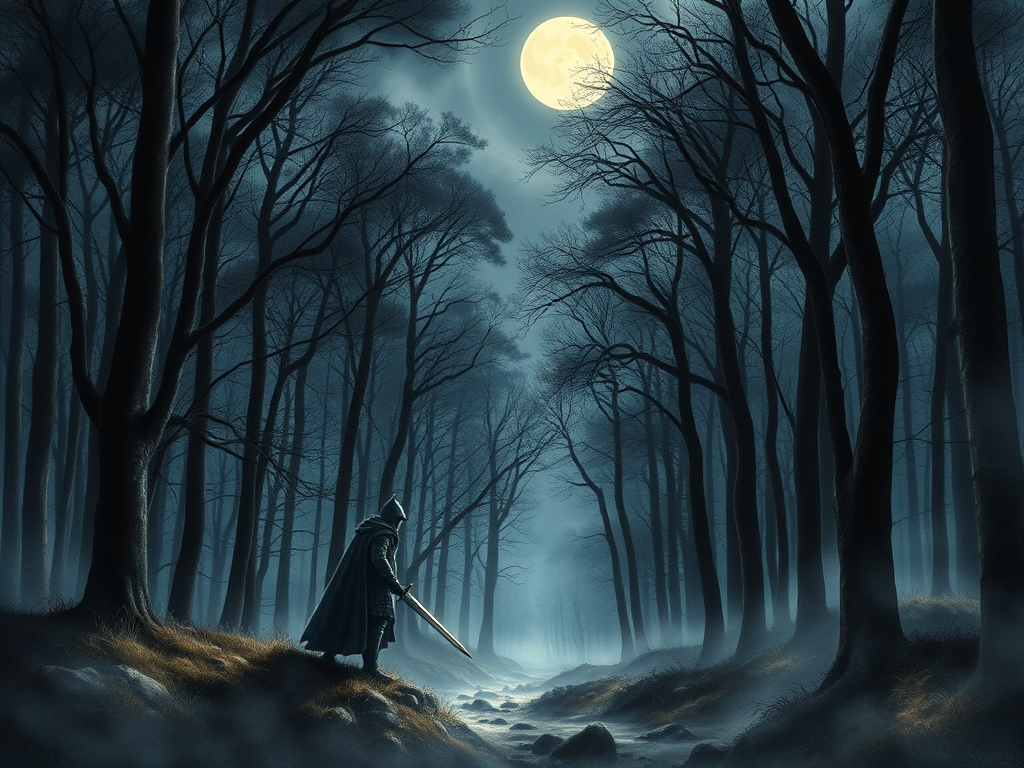
So, there’s a sword in a stone. Only the future king of Britain can pull it out. Along comes Arthur, who pulls it out (hearing Kenneth Williams in my head here). He becomes a super badass warrior with proper fancy armour then ultimately King of a united Britain. Which generally I take to mean England and Wales, because Ireland was still very much doing it’s own thing (more or less) and Scotland had yet to encounter Mel Gibson and begin it’s fight for independence. Heck, even the Italians had left behind a big wall to keep the Scots out, so maybe Arthur popped up for a Haggis and a good craic once in a while, but likely didn’t stop to rule.
Next he meets the love of his life, Guinevere – who because he’s a total stud muffin, falls in love with him and becomes queen. She likes doing all the queeny things, because apparently they’re often more popular than the monarch themselves. Perhaps she started a charity foundation working with water nymphs, as this was often written by men there’s not always a clear account of her day-to-day routine but you’ll just know it’ll have been bangin’. Now, Arthur decides to build a place called Camelot which is kind of a city/renaissance fair template and subsequently capital of Britain (or at least ‘his’ Britain, lord knows where the rest of the country was). It’s then he has the bright spark of an idea to gather a bunch of his mates to be Knights. He throws in a round table, because in Arthur’s Britain they’re all equal. Of course they are, like anyone’s going to push in front of him when queuing for a pint! (raises eyebrow)
Somewhere along the way, the Lady of the Lake pops up for breath while paddling in her pond (maybe in winter it was too cold for senior aqua aerobics) and tosses Excalibur at him. Excalibur being a kick-ass sword with which Arthur and his mates kick a load of ass. One of his best mates and advisors also happens to be a wizard, Merlin, who’s actually a bit of a douche and sometimes messes with the fellas a bit. Arthur’s sister, Morgan le Fay, also might be either a bit of a harlot or a witch and rival of Merlin’s, depends on who tells it. Plenty of adventures ensue, with various versions including them fighting dragons, questing after the Holy Grail (the cup version that apparently held the blood of Jesus Christ – not the one that had Tom Hanks flapping about in France twenty years ago), and all manner of bad knights. The kind that would make Sir Ian McKellan shake his head in disappointment – and you just know Magneto is always right.
Sometimes they’re all besties, sometimes there’s a bit of fall out – like in one version where his other best mate, Lancelot, tries it on with Arthur’s missus. Again, depending on the version you read, let’s just say her Anaconda might (one for the Avalon fans). Shenanigans! Anyway, it all culminates in a big battle (Camlann) in which Arthur is felled at the hands of his mortal enemy (or in some cases, incestuous child) Mordred. Happy days though, he does manage to take the bad guys down with him. He’s laid to rest on the mystical isle of Avalon (which cannot be tracked on Google Earth, but may or may not be near Glastonbury), with the promise that one day he might come back. Like a Disney-led Star Wars trilogy. Again helmed by JJ Abrams.
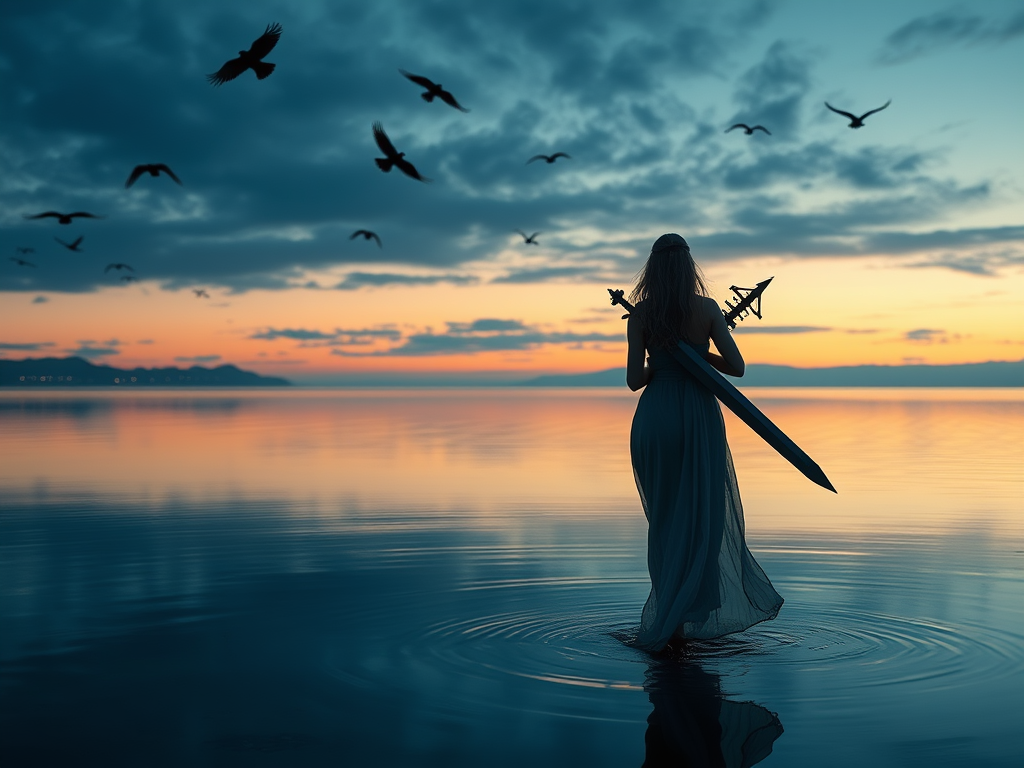
And that, ladies and gents, is the broad strokes of the Arthur story in a giant nutshell. Bonkers. Enduring. Lil’ bit lusty. Distilled from years of movies, television, books and, yes, Stargate. A giant tapestry of tales that reminds us of what we could be and gives timely warnings about politics, especially when it comes from strange women lying about in ponds, distributing swords. It feels like something British that we can be proud of. Idealistic, fantastical. Like modern Britain, it too was shaped (and dare I say enriched) by our global neighbours.
When I first started writing Avalon, unsurprisingly based off of Arthurian lore, it felt like the best place to start for a series about modern day superheroes in the UK. Malleable enough lore that it could tell a tale I felt needed – one about identity, belief and heroism – without straying too far from the inspiration. A world in which equality came at the head of a round table, where women weren’t just pretty bait for kidnapping villains but key powerful players in the tapestry. One where the mythical and the mundane could collide and the OtherWorldly forces could begin to bleed through. Stories of friendship enduring, caught in a shared noble purpose. Stories where good defeated evil, and there was always something worth fighting for, Mr Frodo.

I really hope that one day things will change. Not just here but around this increasingly worrisome world. Being British will be about understanding and owning our historical inheritance, without being doomed to repeat it. Being British will be about celebrating and embracing the rich diversity of all its people, without scapegoating the vulnerable. Being British will be about supporting the global community and contributing to our shared humanity, without being overbearing and taking over. It will be facing injustice, not electing it into office. It will be embracing one another, not painting roundabouts. It will be about being heroes sat together in equity, not at the head of a long table.
Perhaps instead, a round table.
Like King Arthur.
Peace & love y’all.
Rick Rawes
1st September 2025
Leeds, West Yorkshire
PS. If you wanna check out Avalon or it’s sequel Avalon: Faerie Tales based on Arthurian Legends, pop over to “The New Knights” tab!
 Rick Rawes
Leave a comment