
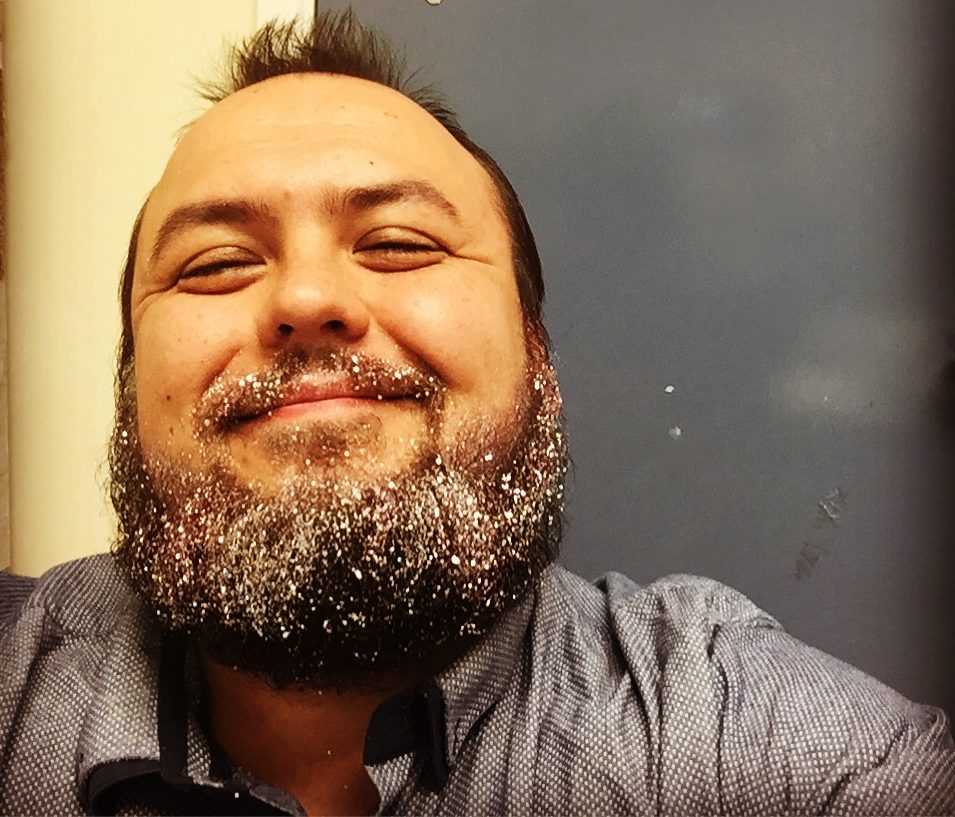
What is a man?
To even ask the question these days feels uncomfortable. Like, in itself, it is an act of political point scoring or defensive toxicity. As if by asking the question, you’re about to launch into a (not so vaguely) misogynistic hyper-testosterone-fuelled tirade while you wait for your pizza to be delivered, or wade in on the ever-present bathroom debate (just let people pee in peace already). Yet, for all our (writing from a man’s perspective) perceived and actual toxicity and historical abuse of power dominating the conversation, there are also competing movements around male mental health as a quiet epidemic.
How the heck is anyone who identifies as male meant to navigate this minefield? And how can we, as writers of fiction, do our part?
To answer that is to answer the question I first posed. We, as writers, turn a mirror on the world. Our male characters are the answer to the question ‘what is a man?’ The ones which may very well outlive us. So how we choose to write is very important.
A Little Context
The first thing to acknowledge is that there is no universal truth or experience. Hence, I’ll explain a little where I’m coming from. I grew up mainly in the nineties and early noughties, where, in simple teenage terms, the line between masculinity and femininity was very clear. The apex man was Arnold Schwarzenegger, the apex woman was Pamela Anderson. Men liked women, women liked men.
Fast-forward to 2026 and what a load of bollocks that turned out to be. I, as a cis gay man, quite happily don’t give a flying rat’s arse about how much I can bench (which I learned recently is a sports term also), or who won the World Cup in 1966 (I think it may have been Paraguay?). I do not have an entire box set on the Romans or the Spartans, although I must admit a healthy crush on Gerard Butler.
I do, however, like a beer. Sometimes more than one too many. I do enjoy a bit of mindless violence perpetuated against European bad guys in Los Angeles towers (welcome to the party, eh?), genuinely prefer pants to a kilt, and shave my face about as often as Paraguay wins the World Cup. And tomorrow, I’ll likely wear mismatched socks as I tackle our garden with a variety of brightly coloured instruments. Like a man.
So, at some point, I figured out that being a guy meant a few things. It meant that if you wanted to be respectful, you walked on the other side of the street when it was just you and an unknown woman by herself, particularly at night. It meant making sure the door was open if you were alone at work with another person. It meant being expected to deal with the house spiders in the bedroom (as in removal, not building them a little cot). It meant hiding a part of yourself if it wasn’t manly enough, because people would then ‘know’.
Now, don’t get me wrong, I’m not saying ‘poor me’ by any stretch of the imagination. These things keep other people (and to be honest, yourself) safe and comfortable. Unfortunately, we live in a world where these assumptions aren’t entirely stereotypical – they exist. But why do they exist? Because some men don’t get that the world isn’t fundamentally just theirs.
How Did This Apply to My Writing?
So, yeah, this is the bit where indie authors probably switch on again. I’ve looked back at my writing some time ago, and something slowly became apparent from my first two books. We’re talking nearly 10 years ago now, when I was a late twenty-something rather than a late thirty-something (soon looking at being a post-modern-early-forty something). And the realisation was this – God, I was a prick about gay men and masculinity.
It was all over my first two books, Heroes & Demons and Avalon. In both novels, there are key gay characters. Rick Carter, Ben Ramirez, Artie Abrams and Matt Merrick. Most of them masculine (ish), most of them bears of some description – if you don’t know what bears are, that’s a whole ‘nother article sometime – and underlying it all was the sense that I had to justify that they were still men. That I had to make some point that being gay didn’t make you feminine. Didn’t make you a woman. And why?
I mean, strangely enough, this didn’t apply to straight men or women in my work. Women were CEOs, hot-headed, soft and gentle, or violent and insane. They were a spectrum, beautiful and unique, each one of them, but defined by their character, not by their femininity (or by whether some had loads and some had none). The straight guys were the same, some were softly spoken and kind-hearted, some were absolute selfish pricks – and everything in between.
So what gives? And then the answer struck me…
On some level, I had internalised the notion that for a gay man specifically, feminine = bad, masculine = good. What the actual… well, you get the last word.
It made me examine things I didn’t like about myself, and that took a lot of introspection. I could probably argue the culture I grew up in was pretty homophobic – and as such took on a kind of internalised homophobic misogyny. And I could probably see in my influence that portrayals of gay men in media were incredibly feminised and one-note. Even the most ‘normal’ masculine gay man I remember on primetime television (Will from Will & Grace) slowly but surely became a hyper-feminine camp version of himself by the time it ended.
I was reacting, and I was subconsciously embedding that shit in my work.
So What Next?
Having that understanding was a revelation. Mainly because it meant I could confront a truth about myself – and in that way sit a lot more comfortably with my overall personality and quirks. It allowed me to realise that, actually, it isn’t always about performing who you are to the world in line with others’ expectations. It’s about being who you are, so throw a cocktail umbrella in your pint of bitter if you wish. Pop on the nail polish if you think it’ll make your toes sing. And glitter? Bloody well love the stuff – they do beard glitter now, do ya know? That has especially made me happier, personally.
In terms of my writing, I went back. I didn’t, nor would I ever want to, fundamentally change the characters I’d already created or their relations to one another. But what I did do was clean up my act a little bit. I took those bits which I felt were trying to justify their own masculinity and, as a result, ended up with a better, healthier outlook presented within those novels.
But I didn’t stop there. After that point, it’s no coincidence I turned to a comedy-drama set around the lives of three gay men (Proud Marys). Here I could tackle the issue head-on, in my own way, and really dig deep into all different types of men – yes, that is what he said. I wrote drag queens and transformation next to all-around nice guys and toxic smokers. I challenged chavs, even the gay ones, and interrogated what it meant to be gay and married to a woman. Some of my favourite lines and moments of all time came from the over-the-top Juan Rodriguez, whether drunkenly demonstrating pole dancing technique to strippers set to Private Dancer, or gliding through the moonlight in his kimono.
I took what I was quite clearly already doing for straight men and women, and applied it to gay men as well. And in doing so, the shackles of who I could and would confidently write about changed. As did a fundamental aspect of my practice – the characters.
Why Does it Matter?
It brings us back at the end to what I asked at the beginning – what is a man? A man is the images we write and the characters we produce. A man, in the eyes of others, becomes who we are. Both those we encounter in our day-to-day lives and the characters we create in the world capture this snapshot in time – this little slice of the cultural zeitgeist.
People will learn from us – again, the us we are in the real world out there – and in the legacy of the characters we leave behind. In our practice, to narrow down to just one type of man is incredibly harmful. I’m not saying we have a job to sanitise or remove negative representation altogether – in fact, that’s quite the opposite of what I’m saying.
I’m saying if you’re writing male characters, make some incredibly feminine. Make some incredibly masculine. Make some happy to hold the door open for you, and others toxic bellends. Write them in ways that show the world what we want to happen – a world in which all men can be respectful and tolerant of others – and also condemn the behaviours we don’t. Let a man enjoy a football game without homophobic slurs being necessary – but if they become necessary to the story, make it clear he’s a knob.
Make sure your characters show readers of our books that it is okay to be a man. And that being a man is a wide and beautiful spectrum, like any other characteristic. That it’s okay to change over time, and be something different or something else as time goes by.
But also, make it clear that the one thing being a man doesn’t give you is the right to make anyone else feel lesser or unsafe. That is not what a man is. That, my friend, is just being a prick.
‘til the End
Rick Rawes
Leeds, West Yorkshire
10th July 2026


Leave a comment