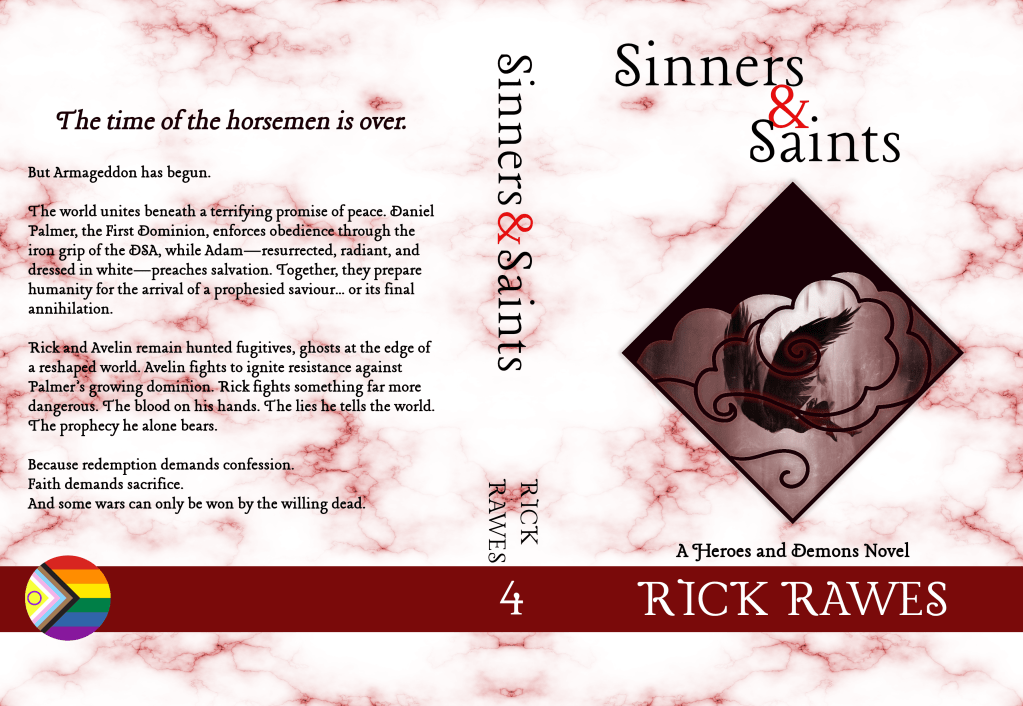
Today, the world gets just a little stranger – and we take one step closer to the end. Because today, Sinners & Saints arrives in eBook and paperback, and a journey nearly two decades in the making moves into its final act. In a world where “normalcy” is being weaponised against people like me, stories like this feel more necessary than ever.
This book begins the Armageddon. The end of all things. Here, we reckon with the fallout of the heroes’ choices, interrogate the truths we thought we understood, and return to the Genesis of everything that has come before. In doing so, we discover just how much more there is left to lose. Sinners & Saints asks the painful questions – because only in truth can we prepare ourselves for the Flood.
Book 4 of the Heroes & Demons series leads directly into next year’s Fall & Flood, the culmination of everything we’ve been building toward. These two novels are two halves of the same reckoning – the moment the saga finally stops holding its breath.
With today’s release, the Sinners & Saintspage has been updated with a small preview of the opening chapters and the full accompanying soundtrack. You’ll see the emotional design of this novel woven through it: dreamlike, disorienting, grasping at shadows. The playlist is on Spotify, and I’ve included a text list of the tracks in emotional order for anyone using other music services (apparently they do exist).
Sinners & Saints is available now across multiple Amazon markets. You’ll find links to key English‑language and European stores on the main page for both eBook and paperback. For now, Amazon remains my primary distribution – though there are some exciting developments coming next year.
And the story doesn’t end here. Fall & Flood (Book 5) arrives in summer 2027, and my next New Knights novel, Echo, releases on 10th October. More details – and more chaos – to come.
Before I go, a thank you. This world doesn’t keep turning without you. Readers are the lifeblood of an indie author’s ecosystem. Without you reading, reviewing, sharing, and keeping these worlds alive, it would be nothing more than one old(ish) bear sat by a campfire telling himself stories. With you pulling up a log beside me, the dark night feels a little less dark.
Thank you – from the heart of my bottom, as they say.
’til the End Rick Rawes Leeds, West Yorkshire 3rd July 2026
If I’m going to keep banging on about reviews (and I will – because they do matter), then I figured I should probably practice what I preach.
I track everything I read over on Goodreads – as both an author and someone who reads far too much – and these are the books that really stuck with me in the first half of 2026. Not necessarily new releases, just the ones I discovered (or revisited) this year and haven’t been able to shake.
If you fancy it, feel free to follow along over there. All opinions are very much my own, and I’ll keep sharing them until someone tells me otherwise.
Fair warning: I’ve tried to keep spoilers light, but no promises.
5-Star Reads!
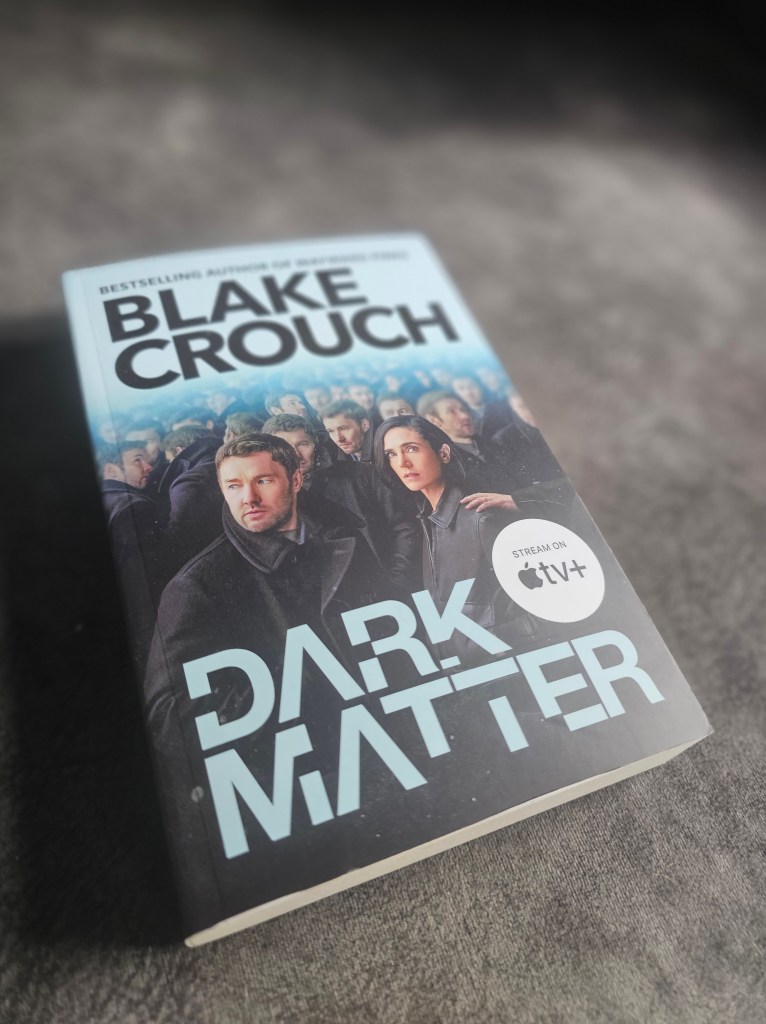
Dark Matter – Blake Crouch
This was my first Blake Crouch novel (I somehow missed the Wayward Pines era entirely), and it turned out to be a bit of a rollercoaster.
Early on, I’ll admit I found myself slightly frustrated with the main character. It felt like what was happening was fairly obvious, and his denial bordered on irritating. But as the story unfolds, it ramps up quickly—and before long, I was completely pulled into the world(s) he’d created.
By the end, it had climbed into five-star territory. If you enjoy mind-bending sci-fi that makes you question everything, this one’s absolutely worth your time.
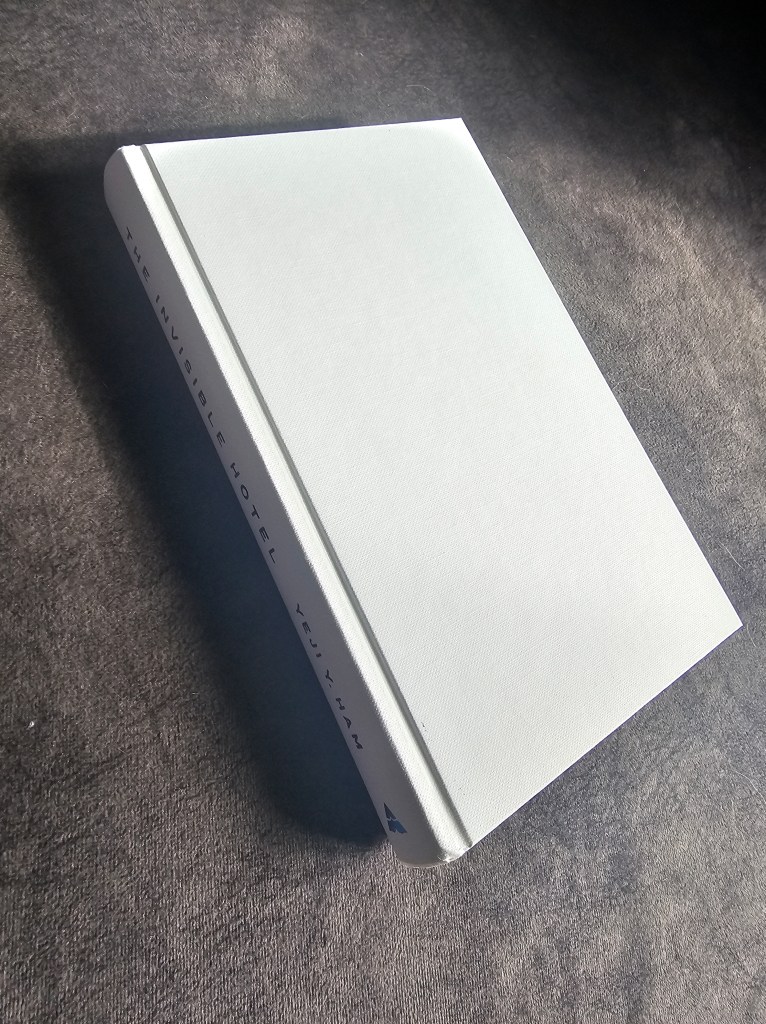
The Invisible Hotel – Yeji Y. Ham
This one came to me through a horror subscription box – not something I would’ve picked up myself. But I’m very glad I did.
Set in South Korea, it’s not an easy book to pin down. In fact, I’m not entirely sure I fully understood it – even by the end – but that feels like part of the point its trying to make.
What it offers instead is atmosphere: creeping dread, lyrical prose, and imagery that lingers just below conscious understanding. It’s not horror in the traditional sense, but more of an that unsettles rather than explains.
Best approached with as little prior knowledge as possible. Let it wash over you and see what you take from it.
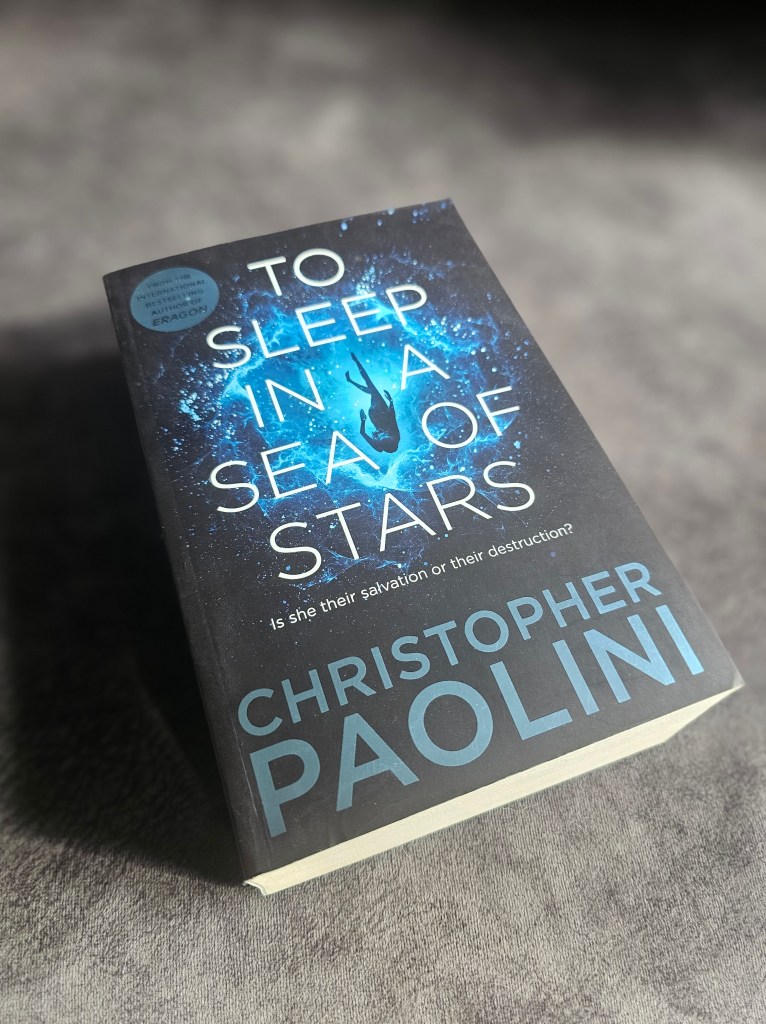
To Sleep in a Sea of Stars – Christopher Paolini
This one caught my eye in a bookshop for two reasons: the cover, and the sheer size of it. A proper brick of a sci-fi novel – which is, admittedly, always going to win me over.
This was my first time reading Paolini, and I was genuinely impressed. At its core, it’s a space opera – but one grounded just enough in plausible science to make it feel tangible. Familiar concepts like faster-than-light travel, artificial consciousness, and alien life are handled in ways that feel fresh.
Crucially, the story stays anchored to Kira, a xenobiologist at its centre, which gives the vastness of the universe a human perspective. You’re discovering everything alongside her, which makes the scale feel immersive rather than overwhelming.
It’s a hefty read – but a rewarding one.
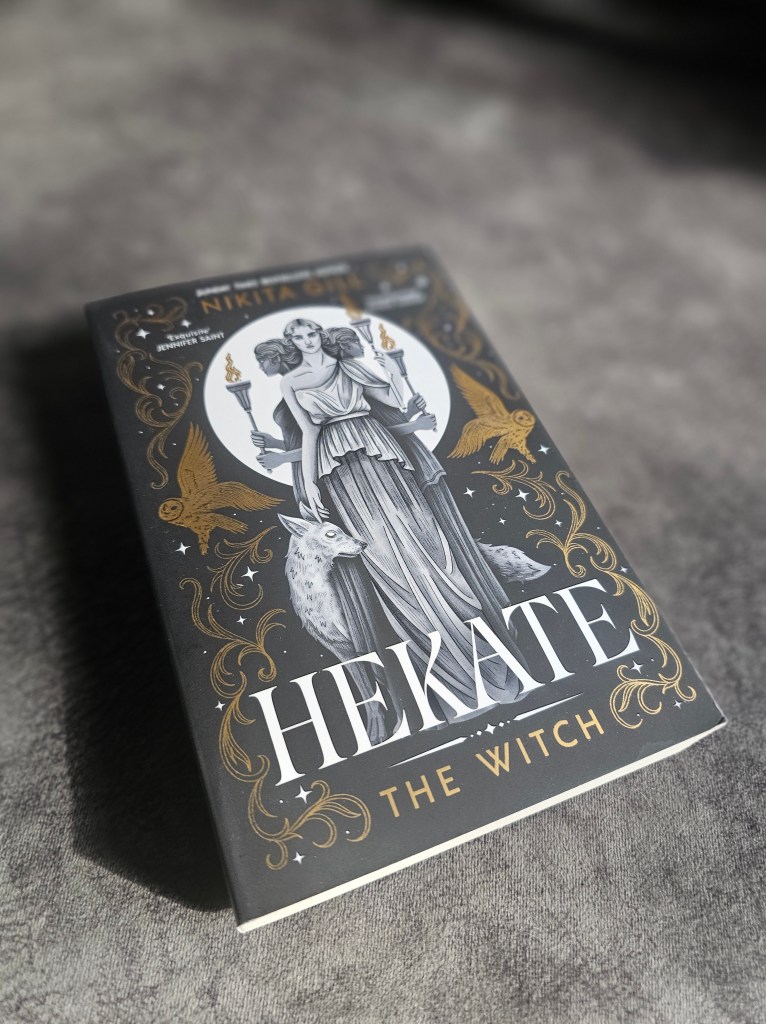
Hekate: The Witch – Nikita Gill
I’ve always had a soft spot for Greek mythology – gods, monsters, the lot – so this was always likely to appeal. What I wasn’t expecting was how it would be told.
This isn’t a traditional novel. It’s an entire story written in verse, unfolding through a sequence of poems. It took me a few pages to adjust, but once it clicked, it completely drew me in.
Gill’s writing is lyrical, evocative, and often stunning. Familiar myths are retold in ways that feel fresh and deeply personal. It’s a book that feels less like reading and more like being immersed in something slightly magical.
There’s a sequel (Styx) on the way, and I’m already looking forward to it.
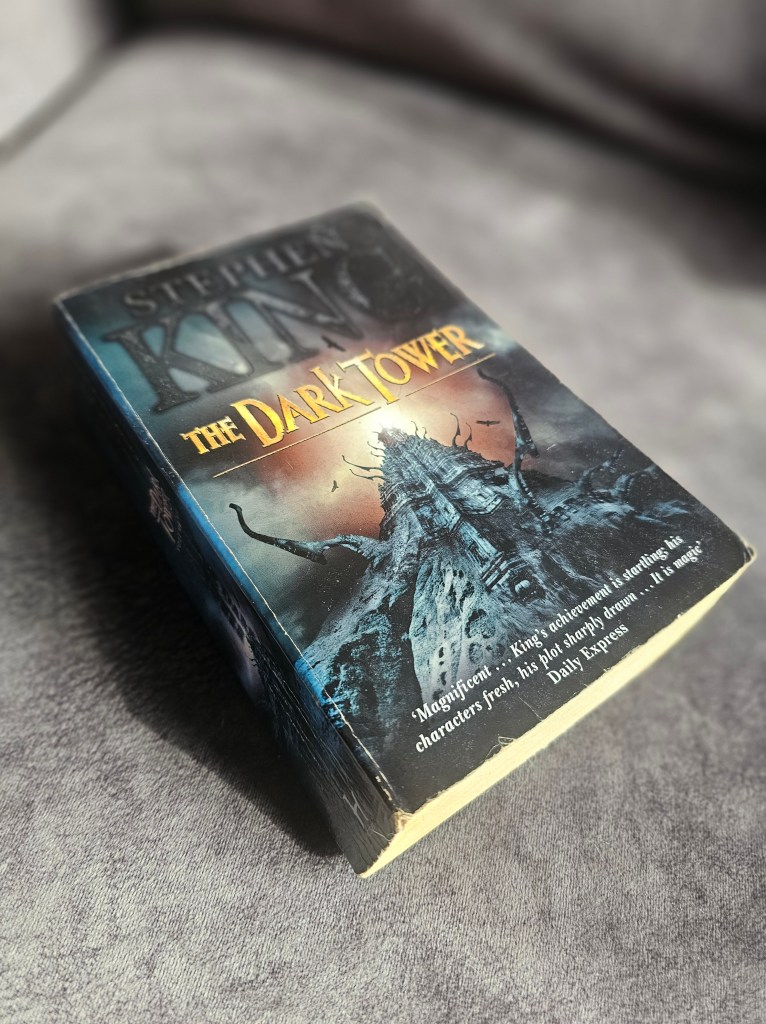
The Dark Tower (Series) – Stephen King
This probably deserves a post of its own – and will likely get one – but it has to be mentioned here.
I’ve been slowly working through a chronological read (and re-read) of Stephen King’s work over the past few years, and this year I finally finished the Dark Tower series.
The early books build steadily – The Gunslinger, The Drawing of the Three, and The Waste Lands – with the latter being, in my opinion, one of King’s best. The middle instalments dip slightly for me, perhaps a bit weighed down by their own scope, but the final entries bring everything together in a way that genuinely lands.
And yes – I teared up. Not even at the ending itself (which I know divides opinion), but a little before. If you know, you know.
If you haven’t read this series yet, I’d strongly recommend it. There are other worlds than these, after all.
Honourable Mentions
If I gave every book the same level of attention as the ones above, I’d never get anything else done – but there are a few that came very close.
A Blackened Heart, A Blackened Soul – John Ward A bleak and effective horror novel. The pacing dips slightly in the middle for my tastes, but it’s still well worth picking up.
Books of Blood (Volumes 1–3) – Clive Barker A classic short story collection from a master of horror. As with most anthologies, there are highs and a few misses, but the best stories here are genuinely unforgettable.
Red Rising – Pierce Brown Brutal in places, but occasionally leans into familiar YA tropes. It didn’t quite reach its full potential for me, but it’s still an engaging read – and I’ve heard the series only improves from here, so I’ll be continuing with Golden Son.
Final Thoughts
That’s everything for now.
A huge thank you to all the authors mentioned here – and to everyone else whose books have helped me escape into other worlds this year. The act of creation is a gift, and I’m grateful for every story.
If you’ve read any of these – or think there’s something I should absolutely add to my list – come find me over on Goodreads or social media and let me know. I’m always looking for the next obsession.
’Til the end, Rick Rawes Leeds, West Yorkshire 25th June 2026
Last Friday of the month can mean only one thing: a new beta episode of ’til the End of the World made free on the site. Episode VII: Go Down in Flames is available here.
Content Warning!
A little warning before this month’s short-story. It’s not an easy read. ’til the End of the World has always been on the mature side of YA – very much relating to it’s roots as a nostalgic look at what we survived rather than the sanitised version of it we’re often given.
This month it takes a hard look at cycles of violence, with themes of domestic abuse, controlling behaviour, and harmful views on full display – and called out. Still, the complexity and nuance may be difficult for some readers, so it’s best to make it clear from the get go. This is a self-contained story, and so anything relevant to the future will be covered before the next episode drops.
’til the End Rick Rawes Leeds, West Yorkshire 26th June 2026
Welcome one, welcome all, and Happy Pride Month to everyone! Yes, even to you, Margaret, giving me that look over your half-rim glasses like some dowdy East Anglian verger. You’re one of us too, and by that I mean, a human being. And some of us, especially those a little o’ the rainbow, are downright vulgar, joyful, colourful and bloody bonkers. So give your custard cream a double dunk in your Horlicks, and lets enjoy the festivities.
And why? Because it’s Pride Month. Not a month-long party, but an annual reminder that the world is shit for all the members of the LGBT+ rainbow – and only getting worse. But this time ‘round, I ain’t preaching about it. You’ve likely followed me long enough now you know I don’t tolerate none of that bigoted shit, and anyone who doesn’t like it can toddle off back to pretend to read their Bible. Instead, I’m gonna do what writers do best – talk your ear off about writing by introducing you to some of my favourite LGBT+ identifying characters.
So on with the show.
L
Beginning with the L – which I’ve never understood why that’s come first. Perhaps because to do it alphabetically, BGLT sounds more like a sandwich. Anywho, we’ll start with ‘Lesbian’. Now, it did take me a while to begin to explore L characters within my works, mainly because of a hesitancy to offend – as I’ve talked about in previous posts. But now that I have, and grown more confident in respectful representation – the gloves are truly off.
Bastet is my most prominent lesbian figure throughout the books – appearing in her own eponymous standalone novel – as well as about to feature heavily in the upcoming New Knights. She is at the centre of my first true romance book. While other stories feature romantic love of all kinds, Bastet was the first one to have a true love story at the heart of it – and as such be suggested to be partially a romance story. While Bastet is not confirmed to only be attracted to women, her defining love story is with dear Leilana – and as such I feel most confident placing her in this category.
But, of course, as sweeping epics tend to do the course of love doesn’t much run smooth. The upcoming Echo will introduce us to my second character who identifies as lesbian, Simone. While we’ll not explore her romantic side too much in her debut in Echo, there are definitely plans in the works to maybe have a little romance on the cards in the future.
What I love about both of these characters is their heart. They are big, bold, brash and don’t stand for any shit – either of them – but at the same time they love deeply, fiercely and with no regrets. I’m proud to learn more about them as time goes on, they have so much left to teach.
G
We venture a little more into familiar territory for me – being a gay man myself – with the G. Here ‘Gay’ characters are plentiful in the worlds of Rick Rawes, so I’ve narrowed down to what I think are the most prominent three. Artie Abrams, Rick Carter and Matt Merrick.
Artie is the mild-mannered psychology teacher, who’s experiences as a gay man have led him to live his life mainly in the closet. Sure, as an adult he can go where he pleases and do what he pleases, but few people – even those closest to him – know. What I really enjoyed about exploring Artie’s story through Avalon and beyond, was how this kind of self-correcting mechanism is so prevalent amongst gay men, even in the modern day – especially those who do not conform or identify with many of the gay subcultures.
Rick is to Artie as day is to night. He loves openly, honestly, and quite frankly, rudely. He is brash, sarcastic, masculine yet unashamedly gay. Yet the facet of gay life that he so clearly embodies is the exploration of how external childhood homophobia and – let’s face it abuse – at the hands of those who are meant to love us, can break us well beyond our understanding even into adulthood. Through Heroes & Demons and the subsequent sequels, we may come to love Rick – but that doesn’t mean we always like him. But, if nothing else, I guess I understand him.
Matt yet again portrays a very different face of the gay journey to Rick and Artie. No tragic coming out story, surrounded by familial love. A handsome gay bear and Magick User, swarthy and sophisticated and crude and warm and funny all at once. He’s the guy you can bring home to mum, who will also crack an incredibly filthy joke about a dark room once in a while. He’s the nice guy, the guy for whom the gay experience has been (mainly) positive. The fabled unicorn, you may say.
Actually, don’t – unicorns are arseholes. You’ll see why in the next Avalon book.
B
Bisexuality is a complex beast. Not gay, not straight – and often facing discrimination and push back from both. Well, f* right off then. Because honestly, sexuality is a complete spectrum – and all of us lay along it at different ends. I myself had a few dalliances with ladies back in the day. Who when I used the word dalliance assumed (correctly) we wouldn’t have much of a future. So, moral of the story – chill.
Ben is probably the only male character I have who would openly identify himself as bisexual – and probably because of how difficult his journey was, he has every damn right to. Appearing in the Heroes & Demons series, he is the one who questions, the one who doubts – the one who looks inside himself and wonders whether it is possible to love both a man and a woman. He embodies the journey of self-acceptance – a journey probably many people are familiar with.
Then on the other hand, there is Linda. Linda Lake. Linda – who cannot and will not define herself by labels – Lake. We know she has had several relationships with men over the years (including one of the Monty Python lot, if jokes are to be believed). We also know she doesn’t like it when men go halves on the bill. We also know she has had lesbian relationships – how else could she have Kevlar-plated Dragon resistant suits made and a lifetime waiver of the entry fee to Hebden Bridge’s Honey Pot? And, massive tragic love story with an ancient Titan, of course. I wouldn’t even use the term pansexual to describe Linda, mainly because she’d scold me with her tongue harsher than a whipping from a trigger-happy Dominatrix.
She’s… Linda. And she loves.
Am I right in thinking that for sexual orientation, that covers everything else?
T
The one area where many of my stories are currently lacking, though again this is very likely for the same reason about respectful representation that I’ve said before, is in gender identity. There were, of course, the lovely trans and cis drag queens of Proud Marys, who were fierce and loveable and sassy in their own way.
What is freeing about writing about so many realms and concepts is that sometimes, stepping away from the concrete existence of a physical earth means you can mess with the status quo a bit. Already, we have precedent from Charlie (first met in the Insomniac) series that thought-forms don’t always adhere to binary gender.
Well, that’s only the beginning. I’m staying deliberately vague to avoid spoilers but there are two upcoming figures – one a protagonist, and one an antagonist – who are very much in their own way evolving those pre-established concepts. One, a protagonist who explores the issue of gender and identity through coming into being. And the second, an antagonist, who shed of physical form now exists well beyond binaries.
I’m doing a lot of work to make sure that what I am doing with these characters is right. That I am writing beautiful, flawed creations that are achingly real – despite existing in worlds of gods and monsters. That I am honouring the part of our community for whom existence is getting tougher at the moment, round the world, all without reducing anyone to a pawn in the hateful world of ‘gender politics’. I am writing individuals who are characters first, identity second – but never hidden.
Until Next Time
So, there you go, a quick whistle stop tour through some of my favourite characters of the rainbow. Like I said, not preaching here, but simply highlighting some of the best. Now, yes, there’s plenty of straights in my work too – you get a participation trophy – but honestly, the novels of Rick Rawes are unapologetically queer-led and queer-fronted. Whether that’s through beautifully human characters, or brutally hammered home points.
By proudly bringing found family to the heart of everything and rejecting stereotypes and tropes all too common in the science fiction and fantasy space, I guess I am committing myself to a political act. By creating characters who live, die, love, and hate – and who we wish to do all four sometimes – I’m saying to the world ‘we are here’. This is our space too. Because we are, you know? We’re here, we matter, we take up space.
And we are proud to.
To every other writer out there wondering how to best represent the community within your works, I give only this little piece of advice. Do it. Write a character. Make them real. Make them gay, make them trans, make them sip their drink with their pinky up. Write them. Check with us, if you’re unsure. But write them.
It’s that easy.
‘til the End Rick Rawes Leeds, West Yorkshire 11th June 2026
Honestly, it feels a little surreal, even after all this time. It took eight novels as an adult to finally make me feel confident enough to take a look back at my roots. To revisit Ricky, Sara and the characters who were my creative world as a teenager. I was just their age when I started writing about them, and now the adult looking back and their story is me.
I use the label ‘YA’ because that’s the one we use. But when we grew up in the world of slayers and hunters and the red-blue blur, we didn’t feel it was ‘YA’. They were stories of love and heartbreak and struggle that just resonated with us (plus cool vamps, of course). These novellas are a lot like that. They are horror stories and love stories. They are warning tales and morality plays. They are the turbulent seas of youth, growing up beside you.
And if you’re looking back as an adult? They’re the testimony to what we survived, and the scars of what it cost us. Proof that adulthood is about changing, not forgetting.
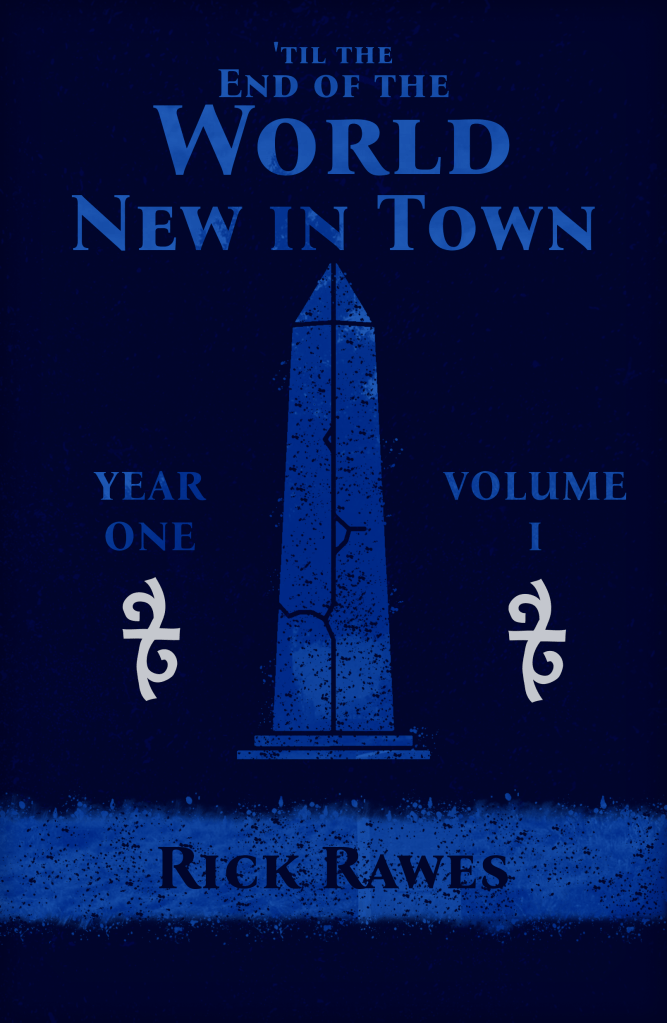
This collection brings together Episodes I to V of Year One, revised, polished and packaged together with both in-universe and behind-the-scenes bonus features. The eBook and paperback editions are both now ready to go (and I have to admit, they look fab).
I’d also like to add a gentle reminder – all of this I do myself. Every word I write, every cover I design, every bit of marketing and self-promotion. I probably spend more on each book than I ever make collectively from them all – and I don’t have global teams, or budgets, or algorithms behind me. But I have a passion to keep going, to show up authentically, and try to reach anyone who needs a little more story (or an escape) in their life. So, please, if you read and if you enjoy – a like, a share, a review, a rating, a post, a recommendation. Anything will help me to keep doing that.
You can find me on Instagram, Facebook, Amazon and GoodReads (along with this lovely website).
And finally, the story is not over. It has only just begun (you’ll get that later). Episode VI’s beta version is live now, with Episodes VII to XI dropping monthly throughout the rest of the year. Where Loyalty Lies: Year One · Volume II, colleting these six polished episodes, will be releasing 4th December 2026.
The end of the world may be coming, but until it does there’s so many more stories to tell.
Redemption. The word itself is entangled in its own ambiguous identity. What is it, and is it truly different from atonement? From justice? From vengeance? Is it something to strive for or something granted by those we have wronged? As such, is it something that is achieved, or something that is bestowed, and does it follow a straight path, or does it loop us back to who we were before the sin?
While writing Sinners & Saints (releasing July 3rd *wink wink*), the theme frequently arose for me (well, for the characters inhabiting this fictional world). But as often happens, the themes discussed and the ideas that emerged reflected much of my own experiences – enough to get me thinking about the concept of redemption as a whole.
In the end, I’ve come to understand that redemption is not the straight road it might seem. Nor does it bring us back to who we once were. We are not purged by redemption; the blood still stains our hands. But as we carry on along our winding journey, we learn to live with the stains.
An Unexpected Journey
By its very nature, redemption must follow the fall. The first act, the event that triggers the loss of innocence. Sometimes this might be one single act – an act so treacherous and tragic that an immediate response is necessary. Sometimes it is a thousand small cuts to one’s character, gradually transforming someone into a person others would no longer recognise.
For many of the ‘villains’ I write about – some already such when we meet them, others more developed over time – those actions are not always entirely wrong. The journey may begin before we even realise our feet are moving – actions that destroy, hurt, or reveal darker truths about ourselves. But they are still our actions, and in doing so, we are often blind to the impact they have.
In fact, rationalisation is by far our worst irredeemable trait. We tell ourselves we are doing what we must or what we should. It’s only afterwards, when the dust settles and the blood begins to dry, that we recognise it for what it is. The next step in the journey.
A Realisation
To begin to redeem yourself, the first step is recognising that what was done is wrong. This might seem simple, but it is far from easy. In fact, it is the part of the process that is as necessary as death is to resurrection – painful, yet essential for what is to come.
Many of us do not realise that this is how it should be. We cling to the idea that what has happened cannot be changed. There is no acknowledgement or recognition of the hurt caused. This is what makes villains irredeemable. If we cannot move ourselves away from the belief that our actions were justified, then we leave no opportunity for the light to shine through. Our journey ends here.
That is not to say we must accept that it shouldn’t have happened. Often, characters will know there was no alternative, but it does not matter. The effect is what matters. The pain is what matters. The impact on another person or persons—that is what counts. That makes the difference between acknowledging you have done wrong and accepting the full cost of it.
A Fork in the Road
So, what’s next? We reach a fork in the road. One path loops us back on ourselves, but like some critical point, it can never take us back before the sin. Instead, it leads us into our own logically disordered thinking and self-justification. The direction depends on where redemption comes from and whom it is for. It is when we are asked the question, how can I do better?
We can justify our actions to ourselves, apologise without admitting fault, and write entire memoirs explaining why we did what we did. Our villains often behave the same way. They see a choice between truth and taking the easier route, and choose to sleep better at night. Or at least, their version of better.
The other fork leads us down a harder path – confronting it. With the very real possibility that there is no reward at the end, no bright future, no day when you can say ‘I am clean’. You and your villains must accept that possibility, that your understanding of what has been done is by itself not enough to undo the hurt that has been caused. It is up to them, the ones you have hurt, to forgive you or not.
All you can do is stand proud, tall, and honest. Try to do the right thing, the better thing, the new path. Fail. Get back up. Try again. Fail again. And so on, each time getting closer to something that feels… right.
A New Beginning
When we, like our characters, find ourselves in need of redemption, many of us wish things ‘would go back the way they were’. We would like to undo the past and return to a world where we never caused harm. But that’s not how redemption works in real life, so it shouldn’t be how it functions for our characters.
We walk, hand in hand with the memories of our actions, both good and bad. We are shaped by them, forged into the person we are now. We reach the end of one journey and realise that beyond us is a winding road leading to the next stage. Onward still. There is no back again, there is only there, some spot on the horizon that guides us eventually to the clearing at the end of the path.
This is why, when I write about trauma, villains, or heroes, they carry their pain and experiences with them. Chapter after chapter, book after book, story after story.
Because even when I am writing redemption, I can never unwrite the stories that got them there. I can only, like myself, move ever forward, towards something new. Towards the horizon.
There’s a moment in every series when things begin to change irrevocably. Sometimes towards greatness, sometimes towards chaos, sometimes both. Episode 5 is when it hits the fan, so to speak, when the architecture of the year as a whole begins to reveal itself.
Bloodier and more brutal, this episode sees the introduction of a very different kind of antagonist. More is revealed about the history of one of our more mysterious characters – and by the end, everything will begin to change in ways none of the young heroes can yet comprehend.
Or if you’re waiting for the collected edition, ‘til the End of the World: New in Town (Year One · Volume I)is releasing 29th May in eBook and Paperback, collecting together Episodes 1 to 5 with brand new bonus features. Check out the link above!
As always, thanks for reading and have a lovely weekend! Until next month…
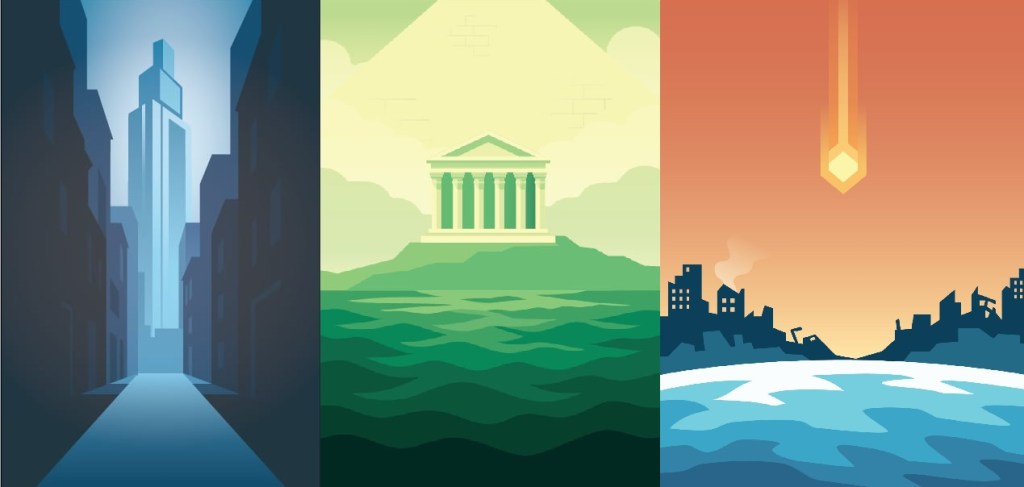
By eck, we get around a bit, don’t we? This week’s blog post is all about a quick introduction to the thinking behind the universe. Not the real one, my one – and some of the inspiration I’ve drawn upon to craft it. Very mild spoilers ahead (nothing world-ending) but I thought I would forewarn. This is a little journey, into the where’s and wherefores of these novels and why we got there.
So, with our satchels packed (hopefully with a nice lunch) let us don our sunglasses and step foot onto the road. This first place may seem a little familiar to you. Well, some of you.
So, welcome to Earth. The main realm. The middle bit of the whole universe. Not because other planets in other far flung corners of the galaxy don’t have every right to be the centre of the universe, it’s just as a writer we’re taught to at least start where you know. And I’ve been around on Earth for going on thirty-odd years by now (shush, not forty yet). And so, we start here.
That’s not to say Earth is a particularly boring place. It’s large, it’s been around about 4 billion years and is host to a whole bunch of beings. Some supernatural, some technological, and some plain annoying. You’ll notice many of the stories are set around Manchester – for two reasons. The city itself is very near and dear to my heart, being the closest city when growing up, so responsible for many fond memories, and also where I did my time in university. Also, where I had my first dodgy kebab coming out of a chip shop at three in the morning after a night on Canal Street. But hey, at least I didn’t eat pizza off the floor of the bus like one of my peers.
The second reason Manchester is the focus is because I kind of want to see a bit more North in contemporary fiction. Don’t get me wrong, award winning books and movies have been set in the north of England. But as much as Full Monty and Chicken Run may have dominated the cultural zeitgeist, where were the dragons? Where were the car chases down Canal Street or a super-powered bust up in Picadilly Gardens? Where were the places I could recognise?
Yes, the Eifel tower might be impressive and all, but there’s something undeniably attractive about the idea of a unicorn fight out the front of a Greggs you’ve frequented.
I generally go with a rule of thumb. Most real places featured in the books – Santorini, Malta, Liverpool, Manchester, London – are places which I’ve been to. I’ve walked those streets, I’ve experienced those places and I’ve added them into my books. Where I haven’t, I may tend to make fictionalised versions. For example, in the upcoming Sinners & Saints we visit the Central American nation of Manantiala and the sand-strewn deserts of Kitbhutan. But largely, by and by, if you visit a place in one of my books, it’s because I’ve been there for you – and want you to have that same feeling of – wow, I recognise that.
In upcoming novels there’s plenty of new places too, because I always love to travel and who wants to stay in one place anyway? So, there’s a touch of Egypt (readers of Bastet might be able to figure out why), perhaps a somewhat autobiographical move to Leeds for some, and a whole new novel set in Sheffield. Exciting times.
Anyway, that’s earthbound. But as a certain young man says in an iconic 80s sci-fi horror western crazy novel, there’s other worlds than these – so let’s move on.
Perhaps one of the closest realms to Earth is the OtherWorld. Now in early British mythology (before there were stricter borders such as England, Wales, Scotland) there was the concept of the OtherWorld. An idea of a place where all manner of magickal creatures lived. A world that lay alongside our own in a way that felt like a thin layer of gossamer paper over an image you could almost just see underneath. Here there were monsters, there were faerie folk, and dragons and unicorns and all manner of things.
When I first starting writing Avalon, the OtherWorld became the catch-all for so many of these beings. A realm, just next door, perhaps overlayed with our own, in which all manner of creatures lived. Though we haven’t been there in person (yet), it is a rich and textured world, overlayed with it’s own rules and hierarchies and social strata. You just have to listen to the way Linda speaks with derision about the Earth Elementals to get it’s not all rainbows and puppies (apparently, they smell like wet dog).
The principle established here though, is the idea of layering. The universe is layered. Now don’t ask me to explain the physics behind it, but somewhere in the quarks and quasars of multidimensional thinking, there’s ideas about other worlds. Places that exist alongside our own along boundaries and borders that are somehow unseen to us. This is not a new concept, this is simply something I’ve woven in.
The OtherWorld is exactly that – other. It is overlayed with our own, vibrating at a similar frequency if you like. I suppose you could also argue that it is not necessarily a bad place. It is different. It is a place where there are monsters, and there are good folk. Morally balanced, if strange and different. And some day – one we’ll visit. But for now, let’s move away from morally balanced – and perhaps speculate on something a little darker.
UnderWorlds: Anwnn
A little further down the Spiral there are the Underworlds. These are worlds still laid over our own in some multidimensional physics kind of a way, but these realms are not quite so morally balanced. These are places where the souls reside, the places of death and darkness. One such hell dimensional prison is about to feature prominently in the upcoming ‘til the End of the World series, but perhaps so far, the most well-fleshed of them all is Anwnn.
Anwnn in Welsh mythology is a dark underworld ruled over by King Arawn. A place of punishment and pain. But when I heard about it (I think I was listening to a podcast at the time) an image struck me. A long beach, without end, the walls too steep to climb on one side, tumultuous waves on the other. The sun cold in the sky, the world desaturated and grey and dull. This image came to me so strongly, and stuck around so fiercely, it became the first visual other world we ever went to – as anyone who’s read Avalon: Faerie Tales will know.
Because each of these realms lie in their own little pocket dimensions, tucked away in the folds of our world a bit further down, Anwnn will not be the last under world we will visit. In fact, any you can think of – Tartarus, hades, Duat – they’re all there somewhere in the universe. Some of them perhaps closer than we know.
And now we’ve seen the darkness out there in the universe, what about that within ourselves? Let’s journey inwards.
The last major realm featured prominently in the novels so far is the ThoughtScape. Imagine yourself eating a burger at the age of three. Now image a crow flies into the window of where you are, tells you that your burger is free of relish and produces a small bottle of the condiment for use. Now that thought exists, in your mind’s eye. As surreal and bonkers as it is. So where does it go when it leaves you?
That’s the idea behind the ThoughtScape, majorly featured in Insomniac. It is less of a physical place and more of a metaphysical plane of existence. The dumping ground for all errant though that exists in sentient beings. A place of wonders – where you are able to endlessly dance at your wedding with loved ones who’ve passed on. But also, a place of nightmares – where our darkest impulses and thoughts are given terrible form. A place of thought.
It arose from a simple premise – and probably not a particularly original one. As a writer I make worlds. What happened to those worlds when they were on the pages? What if, by thinking about them, I made them real. Somehow, somewhere? What if my dreams were real in a way I couldn’t reach? And the more I learn about the way our universe works, the blurry line between conscious thought and objective reality, the more I begin to wonder if there isn’t a little something more to the idea.
Perhaps a little Dark Half, perhaps a little shaped by the idea of tulpas – the ThoughtScape is one of those places that’s a little hard to get out of your mind. And so, it will make a return, perhaps in some unexpected ways. Which, speaking of, you may want to stop listening to Boney M. Just sayin’.
We’ve journeyed a distance even if those few places – and maybe not necessarily in miles but certainly in thought. A grand plan, a map of the universe, with a few places laid out for you. If these places seem like ones you want to visit, all the books are available with more to come.
But I suppose the last thought I’ll leave you with is this. A lot of the places I’ve been to, and a lot of the places I haven’t. Imagination is the key which bridges those two things – and all of us have imaginations of our own to tap into and play around with. Go visit other places, even if you can’t in body – do so in mind. That’s one thing we should all do more of, whether we commit it to paper or not.
And to the writers of the world out there, if you’re going to write about this world, maybe take a look at the other places you can go. Don’t get me wrong, I love London. As a UK based author, so much I see takes place in London. But maybe don that cap, grab that satchel and stick on those (incredibly optimistic) sunglasses and travel.
Head North, come to see us up in Manchester. Or maybe bob over to Leeds, or to Liverpool (sorry to readers of Fire & Water, I promise it’s still there!), or maybe even to Sheffield. Head further up to Scotland and see the majestic mountains or take a trip out to the beautiful valleys of Wales. Hop across the pond to Belfast and see what’s over there.
Because, as much as I love other worlds, when it comes to writing and reading about this one – there’s life beyond the Thames. There’s other worlds, right here. Come explore them too.
I wake in the morning and sometimes I feel grey. I’ll start a conversation in the middle, having skipped seventeen different plot twists in between. I’ll overthink an interaction with a human being to the point of simply being unable to do it.
My point, and trust me I do have one, is that I think. From the moment I wake, to the moment I sleep – and even afterwards as my brain goes into the funk land of dreams – I have conscious awareness. It comes in waves and patterns that are simply my experience. What we as writers do, or I think what we try to do, even if we don’t always succeed – is try to think like someone else.
Not easy, is it?
To write as though you wake in a morning and immediately run through the upcoming day in your head. To write as though the feel of any fabric against your skin makes you want to scream. To write as though you forgot where your sentence started, when…where was I again? To live and inhabit someone else’s world is a true challenge – but shouldn’t we all do it?
Quick Disclaimer
This post is in honour of April as Autism Awareness Month – with broader discussion of neurodivergence as a whole. I don’t have a diagnosis of any neurodivergent condition, nor is it my place to comment on whether diagnosis is even appropriate. Please, by all means do educate yourself further on this topic through great charities such as the National Autistic Society or the Daisy Chain project, among many others.
What I’m going to discuss here is very much about thinking differently – hence, neurodivergence, as the best place for an author to start. I mean no disrespect, quite the opposite. If we were to all take a moment to think other people might think differently to us – maybe the world wouldn’t be quite as much on fire.
Or maybe it would, just for different reasons – like all of us trying to focus on seventeen things at once.
So with that said, why does the work of authors matter? Let’s consider representation.
Representation
Like many people, I don’t think my first experiences with understanding neurodiversity came from a particularly positive source. Unfortunately, the eighties, nineties and even early noughties of my youth were hardly the most representative.
Where neurodivergent conditions were named, or heavily suggested to be the case, they tended to fall into a few categories. Tourette’s was played for laughs, with tics and swear words being ‘so funny’. Or ADHD, particularly focusing on children. Who doesn’t remember a haggared looking Lynette run around on Desperate Housewives considering whether to medicate her poorly behaved children? (I guess anyone who never watched the program). Or anytime someone had autism or similar conditions – Rain Man for example – they would immediately be a complete savant with either music, math or some other incredible skill.
And to be fair, this hasn’t exactly changed in a lot of genres, Sci-Fi in particular. The Predator came under fire for so many things (many of them valid – I mean, gene enhanced yautija, come on) but also because once again a young kid with neurodivergence was a savant. Or Touch, the short-lived Kiefer Sutherland-led series in which his young son had an incredible affinity for maths which…okay I have no idea what was going on even by the end of the series. Aliens, maybe?
Other series have done it well. Many readers have found The Curious Incident of the Dog in the Nighttime to be a strong example of positive representation and how it can be done right – though granted not unanimous. It can be done. So it should be.
What Can We Do?
So starting from a pretty low bar, what can we as authors do? Some may say, why even bother? Should it really be our place to try to represent something which is so multi-faceted and also so different to the neurotypical experience of many of us?
To that I would say, I agree, I’m not an expert on neurodivergence. I’m also not an expert on dragons. I’ve never been to the OtherWorld or the Thoughtscape or Anwnn, or any of the other realms I write about. I’ve never been stalked by a psychic projection of my own subconscious guilt, nor fought a day in my life.
And in terms of characters? I’m not an expert on autistic people. But I’m also not an authority on the lived experience of people who identify as BAME or trans. I’m definitely not an expert on women – and honestly, can I really represent straight people?
There’s a point there somewhere.
We’re writers, our imagination is absolutely our tool. But our imagination also has a responsibility to be somewhat fair. We get some experience, we talk to people who DO live those experiences – I had great conversations with a friend with adult ADHD about his thought processes. And where we don’t have lived experience like that to draw on – we educate ourselves.
And if after that, you’re still wondering whether you can do a neurodivergent character justice? Or don’t want to offend someone with an iffy representation? Then maybe, just start with thinking about thinking. Making our characters diverse, in thought processes as well as physical appearance, emotional responses etc – that in itself will help to go some way towards a healthier representation of the human experience. The rich fullness of it. Someone may read it some day and feel a little more seen.
The only thing to not do, is repeat the mistakes of the past. Maybe don’t make someone’s tics a punchline, because it’s been done before. If your story requires a savant, maybe consider if it really does have to be a young boy who’s otherwise uncommunicative.
Summing it Up
In short, representation only goes wrong when you either repeat the mistakes of the past, or push forward with an ignorant present. All it takes is to try. To think about thinking. Your own and those outside your own experience.
So whatever you think when you wake in a morning, wherever in a conversation you may start – beginning, middle, or end – or whatever first springs to mind when you’re faced with the dreaded human interaction – maybe your character will approach those differently.
And if you’re unsure how differently? That’s when we ask.
That’s when we learn. When we think, whatever way we do that.
Rick Rawes Leeds, West Yorkshire Friday 10th April, 2026
Here we go, another book, another cover! Only this time around it’s not ‘another book in the wall’. Before the reveal, I’ll share a little bit about the process that’s gone into getting here, especially for those who’ve been with me since the beginning.
The Long Road to Now
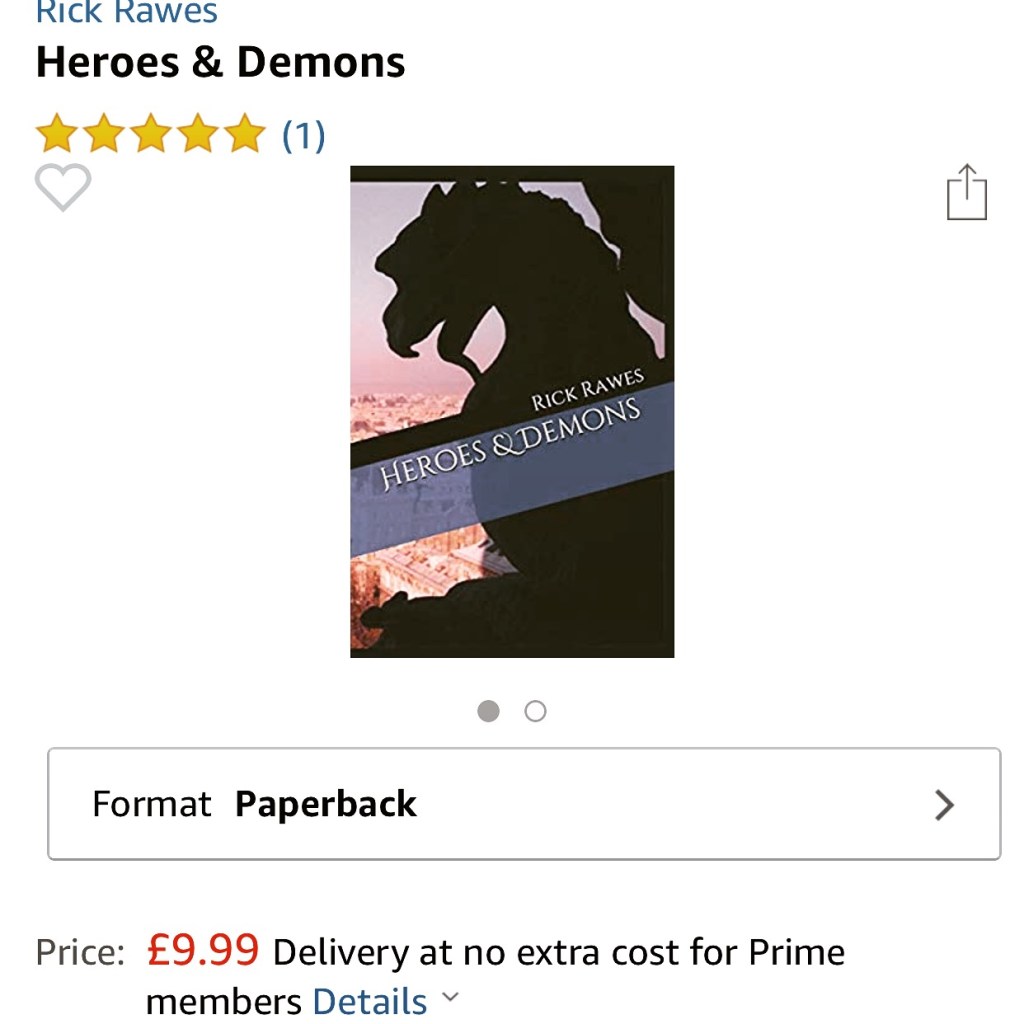
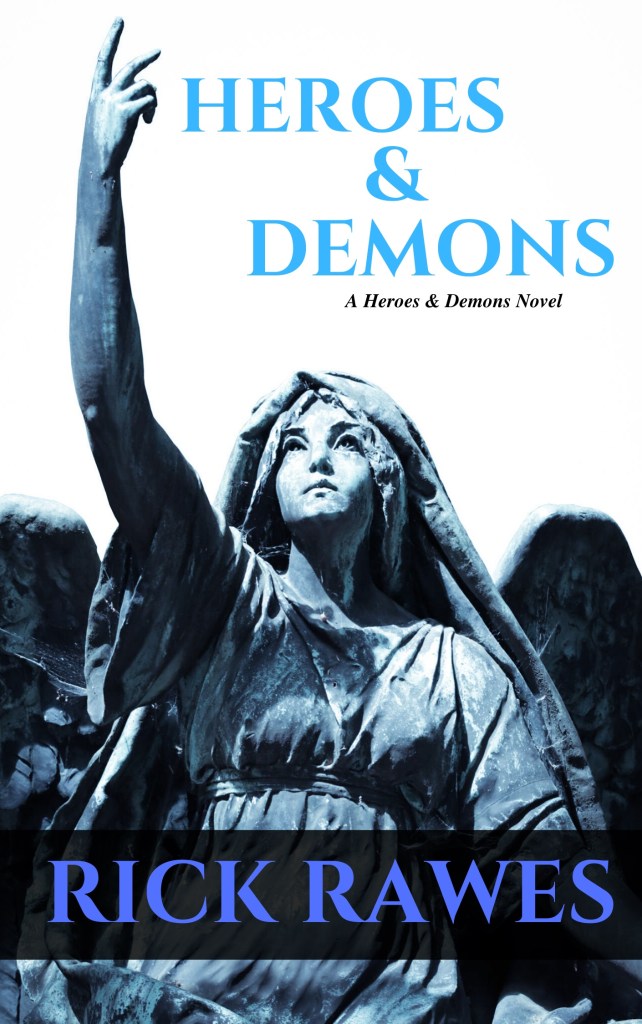
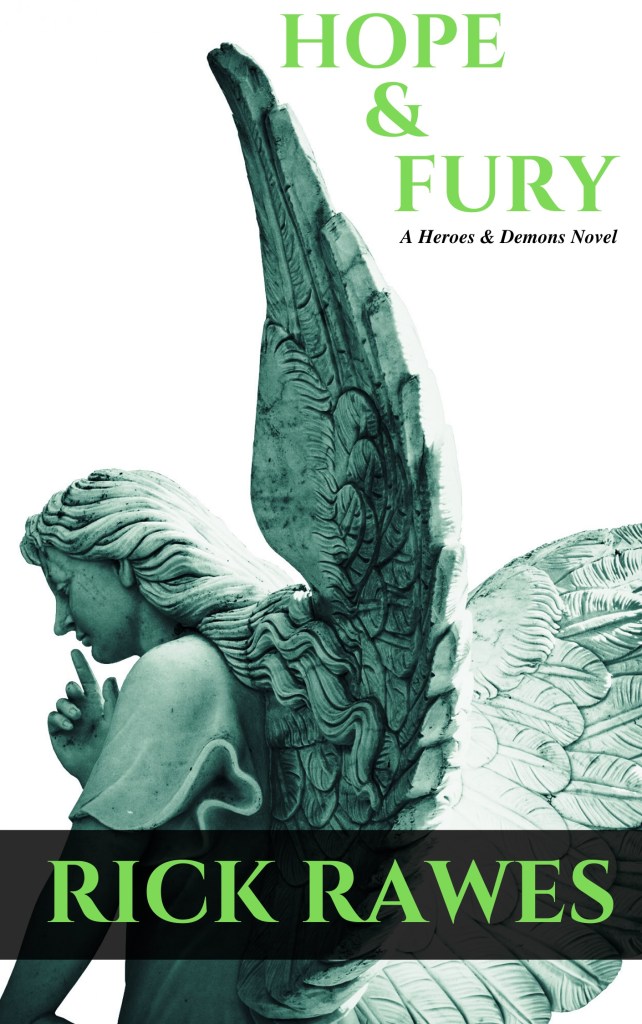
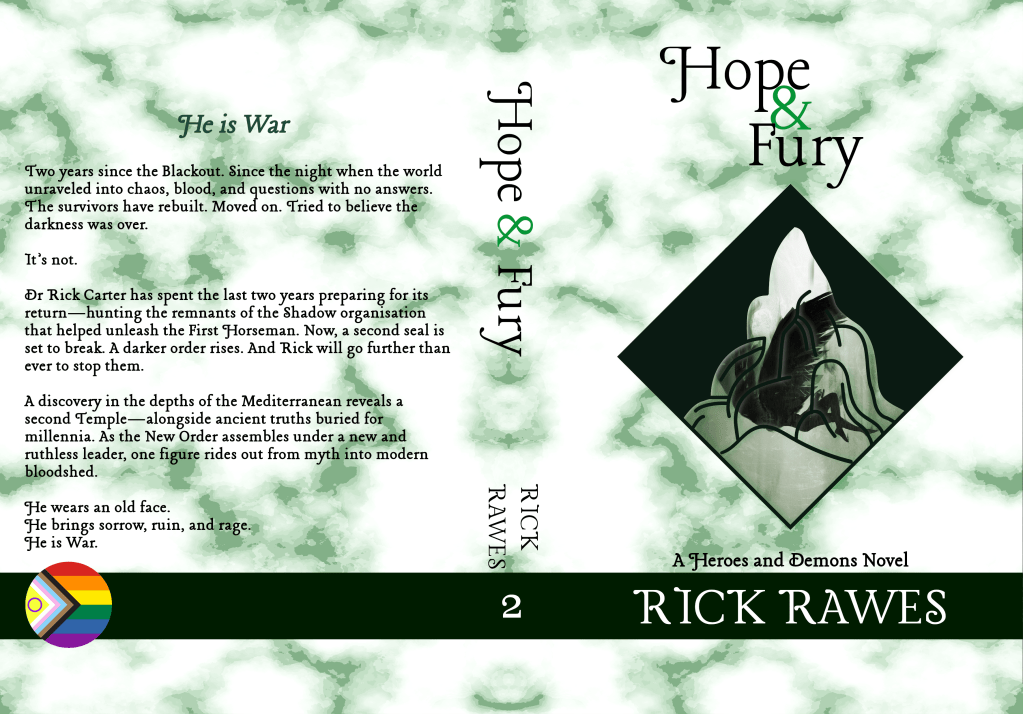
Over the years the Heroes & Demons series has gone through a few iterations. My first fumbled attempt as a newbie came in 2017 with Heroes & Demons, using the original KDP cover creator (I cringe – what the heck a gargoyle over Paris had to do with the story, I don’t know). Reworked for the sequel, Hope & Fury, using free stock images and a bit more finagling. Better, but still not what I always wanted.
OriginalHeroes & Demons (2nd Attempt)Hope & Fury
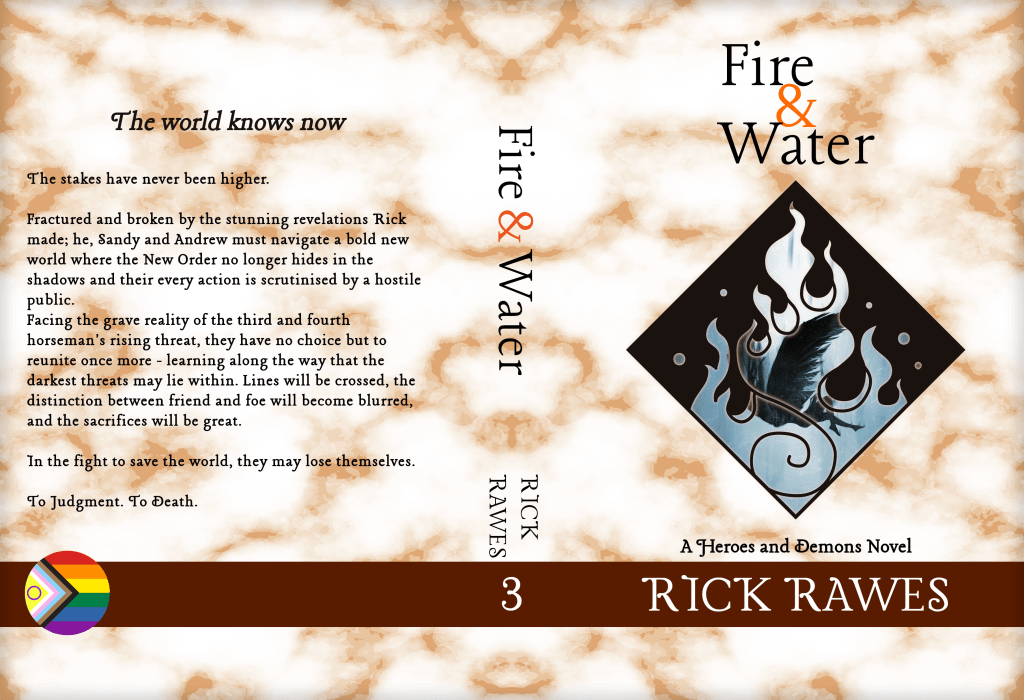
Then last year, as Book 3 Fire & Water was due to be released, a good friend – a fantastic graphic designer – stepped in (paid of course). Using a combination of his wizardry , and my symbolic vision, we produced a brand new look. The horseman trilogy was complete – but one thing led to another and then my friend was unable to commit to helping further (paid or not).
So, I was left with the indie author’s dilemma as Book 4 approached; three options before me:
pay upwards of £1000 for a professionally done book cover by a talented graphic artist
turn to the dark arts of AI to generate a technically proficient but obviously generated cover
roll up your sleeves and try to learn design for yourself
Well, to be completely clear, I’m not made of money (as many indie authors aren’t – and the snooty ‘spend money to make money’ brigade can clear off) and, when it comes to using generative AI for art of any kind other than as your own mood board, I’m not willing to compromise my morals.
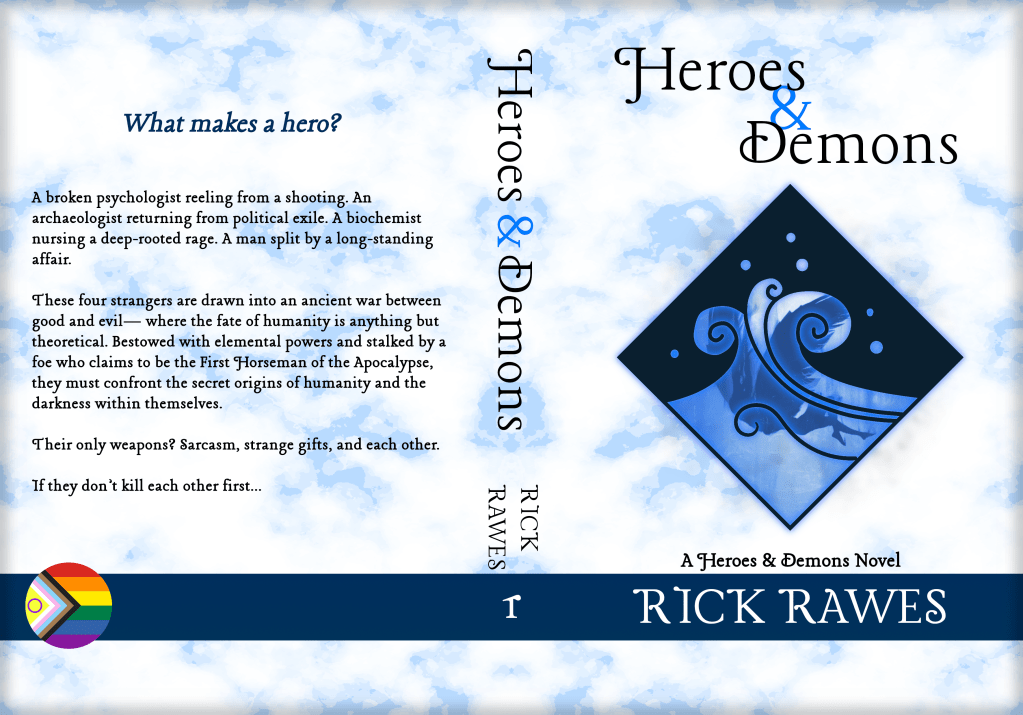
Learning a whole new bunch of graphic design skills it was then! And, since trying to create my own version of the previous covers’ work and match it up to Book 4, I ended up having to go back and start from scratch with all of them. More than that I wanted to, to play and tinker and create in a whole new way seemed like a challenge but one I was ready for.
What Came Before…
First, Heroes & Demons. Deep blues combine with the alchemical symbol for water, beginning as we do with deep revelation.
Then, Hope & Fury. Less about revelation, and more about fracture. Soft dark greens of the marble wrap and the elemental symbol of Earth – combine to showcase war.
The last of the older books, Fire & Water leant heavily into duality. The alchemical symbol for fire the central focus, while burnished oranges of marble showed just how much the world was set on literal fire. And, as anyone who’s read it knows, that’s only half the story – the duality runs deeper than flames alone.
The Biggie – Sinners & Saints!
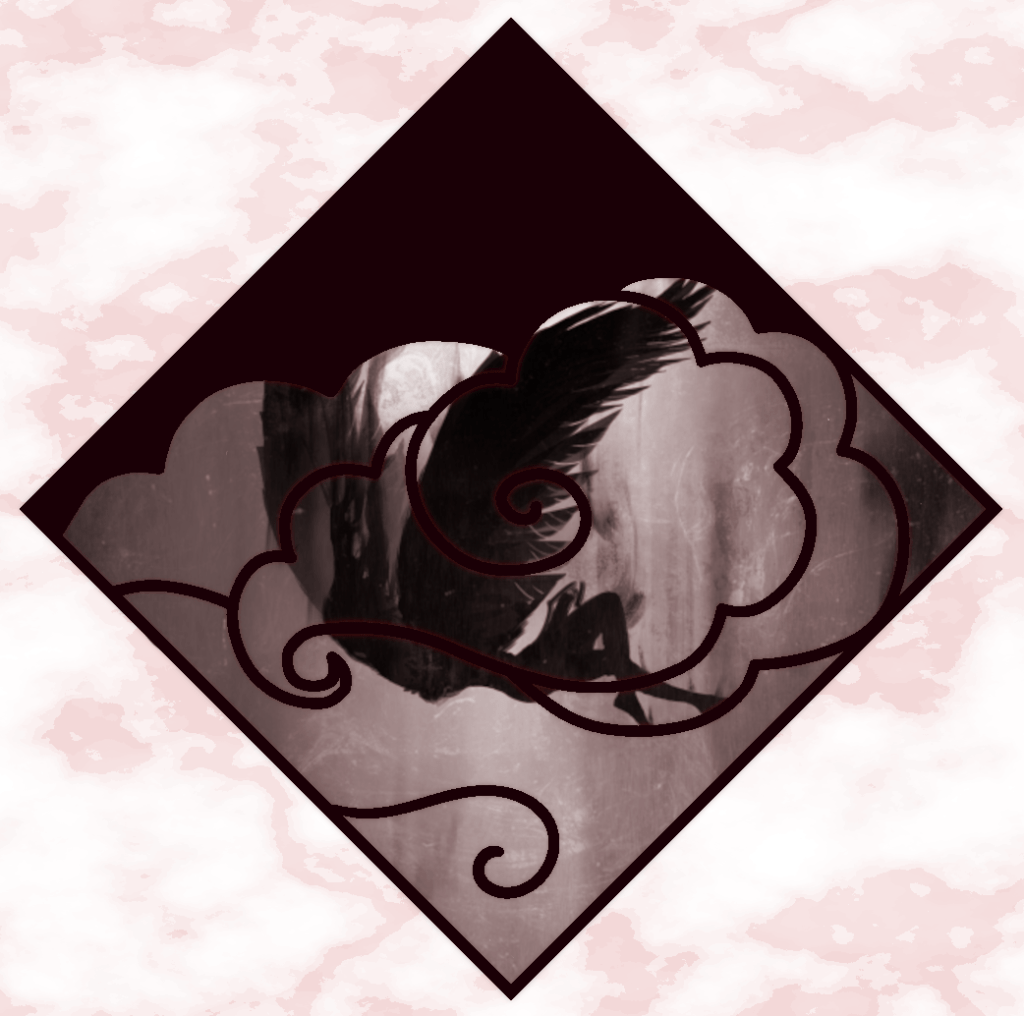
And here we go, the end (well, penultimate novel). Where everything changes. We finish our elemental motif with air. We keep the marble effect, only now leaning very much into the palette of dried blood. Wounds which linger, which stay with us, which scar. The cover for Sinners & Saints isn’t just a continuation of the theme, it’s fulfilment of a promise. That though the story will change, it’s still not over – nor will the sins of the past be forgotten.
Here’s the culmination of everything we’ve been working toward:
Let Me Know What You Think
There we go, let me know what you think either in the comments or via various socials! But remember, while I appreciate feedback, I also believe in respect. The internet is enough of a wild west that if you’re here for the trolling, keep scrolling. Otherwise, let me know what you think. And if it’s enough that you want to check out the book, it’s releasing 3rd July, 2026 – you can find all the details here.
A last little word before we head off this time around – although mainly this goes to my fellow independent authors out there in the world. You do you. Truly. Most of us do this with no one to hold our hands and tell us its going to be okay. Social media is a minefield of negativity, of put-downs, and somehow worse than all that – of deafening silence. You probably don’t have an endless coin-purse, an entire marketing department, and the endorsement of celebrities and influencers.
But what you do have, what we all have, is a story. You believed in it enough to write it. So take advice sure, but do the cover your way. Do the book your way. Share it with the world – and do so with an open heart. Someone out there will be drawn to it. Someone out there will love it. Someone out there will see you for it. So until you find them, be that person.
You wrote a story after all. And for each one of us, there’s many, many more who were too scared to. That in and of itself, gives it meaning.