
“It’s terribly simple. The good guys are always stalwart and true, the bad guys are easily distinguished by their pointy horns or black hats, and, uh, we always defeat them and save the day. No one ever dies, and everybody lives happily ever after.”
(Rupert Giles, Buffy the Vampire Slayer Season 2 Episode 7 ‘Lie to Me’)
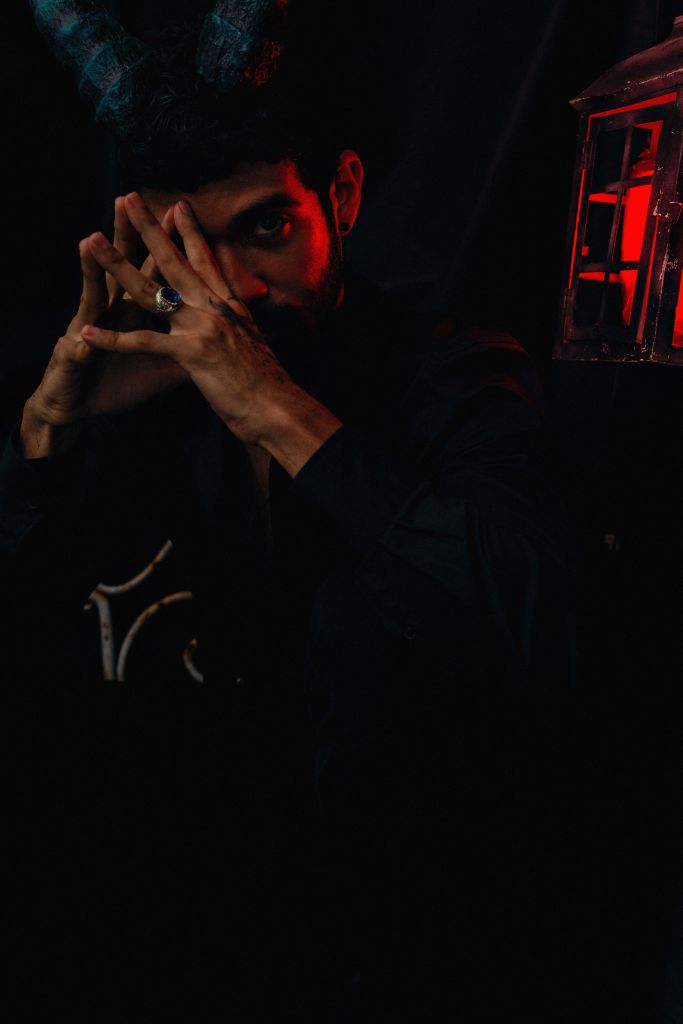
God, it feels like I’m at the world’s worst wedding, or applying to the strangest university with an opening quote like that, right? But it’s one of my favourites. It has always stuck with me. A comforting lie told by an older mentor to his young charge. And in a show that seemed wall-to-wall with uncomplicated villains, everything from a giant praying mantis seductress to cultist frat-boys and beyond, it seemed like a rather strange statement.
But I suppose it comes down in the end to what makes a bad guy? What makes a villain? For me, it’s pretty simple. I finished my first book ever written, Heroes & Demons, with the line ‘there’s no such thing as heroes’. It could quite as easily have been ‘there’s no such thing as villains’ – and the point remains the same.
* minor, minor spoilers may be present for my books – nothing you couldn’t glean from a blurb – but you’ve been warned
My Favourite Villains Growing Up
I was never a particular Disney fan growing up; I left that to my mother after I moved out, but of course many of the early villains I was exposed to were them. Cruella de Vil, Scar, Ursula. Usually, you knew who a villain was because of a small beard (hello Jaffar), a facial disfigurement, or because they wore black. It was simple.
But my favourites in wider fiction, the ones that stuck with me most, were remarkably understandable. Take, for instance, Sean Bean’s performance as Alec Trevelyan in Goldeneye. He was obviously having fun with the Bond villain, twirling moustache role – but come on, if you were blown to shit by your best mate on a mission and subsequently disavowed by your bosses, you’d be a bit pissed, wouldn’t you? Maybe not detonate an EMP in orbit above London pissed, but certainly not sending Judi Dench flowers on her birthday.
Or take Lord Farquaad from Shrek. Yes, he’s a complete knob, replete with the world’s worst bedspread and a remarkable propensity to have other people sacrifice their lives for him. But he’s also constantly the butt of the joke, and he has enough power, entitlement, and resentment to make a difference. Surely if you’d spent your entire life being looked down on, figuratively and literally, by the people in your life who always choose the better people, you’d gain a little inferiority complex, wouldn’t you? You might even act out a bit.
And then there’s the theatrical villains. Because, believe me, a villain doesn’t always have to be someone who’s remarkably complicated. Take Alan Rickman’s performances as both the Sheriff of Nottingham and Hans Gruber – two of the best villainous performances of all time. One, a snotty little self-serving bastard who knows just how horrible he is and yet can’t help himself, and the second… well, not too different. In both cases, they’re motivated by greed and an urge to take what isn’t theirs, but they’re so self-aware they can have fun with it. To cut someone’s heart out with a spoon, or maybe count to three, pointing out there will not be a four?
Absolute peak smarm – and therefore entertaining villain.
What Makes a Villain a Villain?
But what makes a villain a villain? I ask this rather than what makes someone an antagonist, because I find them subtly different but related. After all, an antagonist can be a force. Take, for example, adulthood in Buffy the Vampire Slayer season six: not something you can fight, but something that becomes determined to make your life (or afterlife, I suppose) as miserable as possible. Or an antagonistic natural force – like the T-Rex in Jurassic Park. Just looking for a decent meal and a place to have a kip – and then some irritating kids scream their way through your paddock. You’d wake up grumpy too, right?
No, to me a villain is something fundamentally different. It’s a conscious step, or choice, towards antagonism. A being, or beings, bound to cross paths with our respective heroes because their goals and motivations differ. At least, in fiction. Perhaps in real life, a villain is only who we label them to be.
Take this idea – you watch your entire family taken away from you, murdered systematically by the government. All because you and they are different from the masses in so many ways. Then, as you grow up, you realise that seeking revenge against them doesn’t change anything. But through a choice friendship, you come to understand that perhaps helping others might finally make those demons fall a little quieter.
But then, you see it all beginning again. People like you, demonised. People you love, taken away. By the very people you are there to protect, to help. They look at you with hatred and revulsion because you are different. So you do everything you can to protect yourself and people like you.
Yeah, you’re Magneto. And people might say murdering a few congressmen is a bad thing – but compared to the genocide of mutant-kind, something you know is a distinct possibility given human nature – is it so problematic? I’m, of course, being facetious; he never equated his actions with being right. But necessary? That’s a different story.
That’s what makes a villain. A hero. Of their own story.
Writing Villains
So when I write villains, I start there. I don’t think of them as the bad guys; I think of them as the opposing force. The intersection. What are their goals and motivations beyond simply twirling their moustaches? After all, there are plenty of great female villains; shouldn’t they get to twirl something as well?
I start with the motivation. What do they want and why do they want it? They wake up in the morning, and what gets them going? Sometimes, it’s a species-wide concern; take the dragons in Avalon, who are very much focused on the survival of their species (in a manner of speaking). Or take, perhaps, my favourite villain I’ve ever written, whose entire motivation began with a simple urge: never to have to kneel before anyone again. Brought about by society, by their gender, by their race, by being treated as different, as sub-human, even within their own family.
A villain’s actions always start with a villain’s motivation. And yeah, along the way they may enjoy a theatrical flourish or two. There’s an upcoming villain whose entire introduction was inspired by a Lady Gaga song (ironically about John Wayne). But with every story, I then twist it and think… what if they were the hero?
What if they were trying to save their species? What if they never wanted to be made to submit ever again? What if they believed everyone they loved had abandoned them? What if they were always told they were important and the throne was theirs? What if their best friend broke their heart? What if they watched humanity tear itself apart and wondered whether it might be better to start again?
And what if I told you someone had killed? Not once, but multiple times. Withheld medical care from a dying man? Stabbed a woman in the heart after throwing her in the river? Shot someone else dead with a shotgun in the street. What if I told you that was a protagonist? Stripped of context, sure, or perhaps, only perspective?
In short, I want my villains to be as understandable as my ‘heroes’. Not excusable, but understandable – moral repugnancy and intellectual understanding aren’t mutually exclusive concepts. I don’t discredit the idea that sometimes it’s scarier to not know. Michael Myers’s motivations, for example, are never explained, making him the Great White Shark of Halloween cinema. And sure, that’s scary.
I’m just saying, for me, as a writer, it’s sometimes much scarier to understand where a villain comes from. Because then you can ask yourself perhaps the most terrifying question of all: if I had experienced what they did… what would I do?
Would I become that same villain?
Or would I tell myself that there’s no such thing?
‘til the End
Rick Rawes
Leeds, West Yorkshire
13th November 2026


Leave a Reply